Coffee Roast Dates & Freshness: What the Bag Is Really Telling You

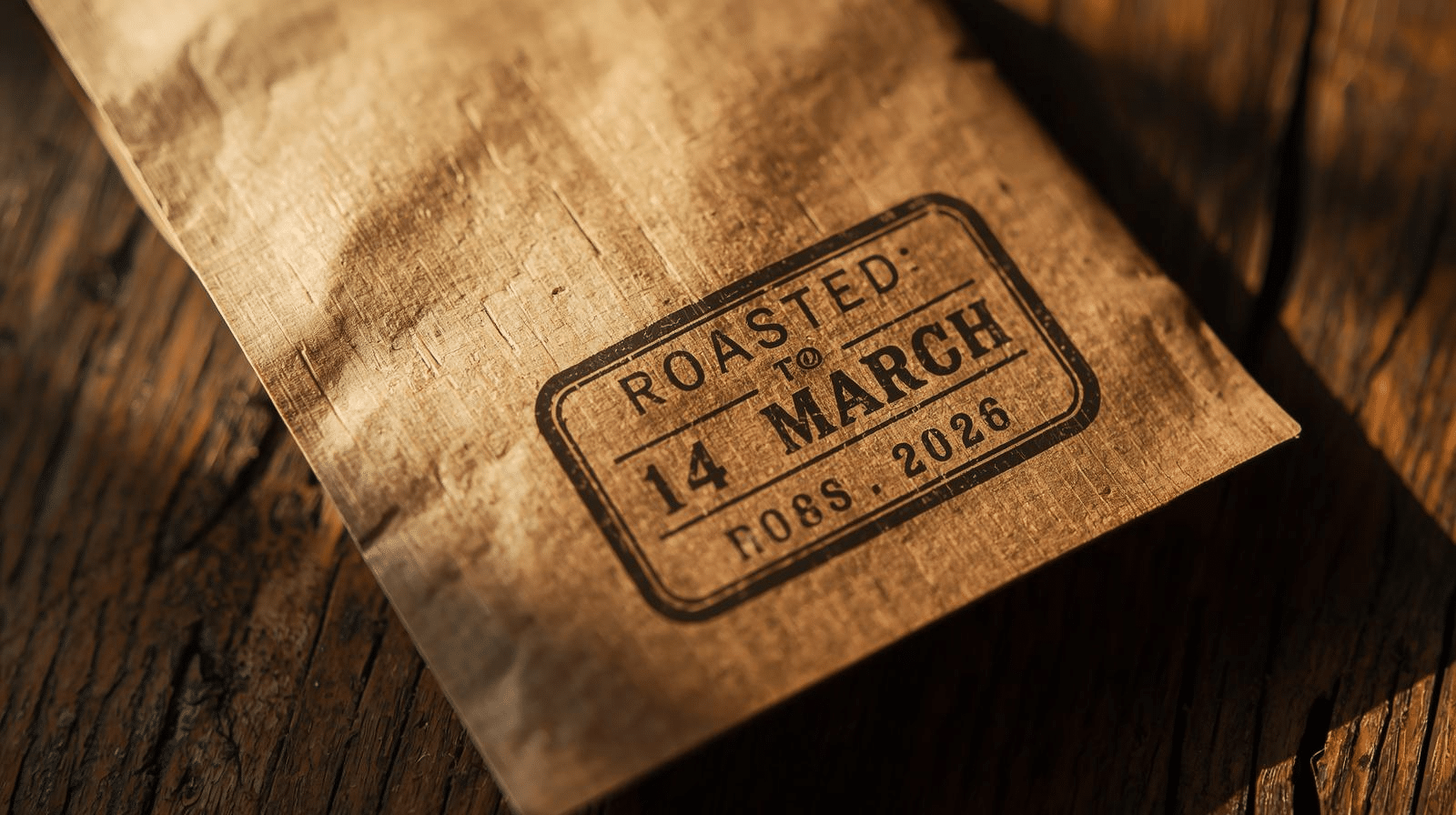
I’ve bought more coffee bags than I can count — mostly 100g and 250g bags ordered directly from roasters. The single biggest predictor of a great cup wasn’t the origin story on the label, the altitude, or even the price. It was a small stamped date near the bottom of the bag. Archer’s Coffee always prints it. Not every roaster does. That difference tells you more about a roaster’s confidence than any marketing copy.
Research from the Specialty Coffee Association indicates that roasted coffee begins losing measurable aromatic compounds within days of leaving the roaster — yet most supermarket bags carry only a “best before” date that can be 12–18 months out.
Why Coffee Roast Dates Exist — and Why They Took So Long to Become Standard
The first time I noticed a stamped roast date on a bag from Archer’s Coffee, I stopped and stared. Then I tried to recall if I’d ever seen one on a supermarket bag. I hadn’t. Not once.
The Supermarket Era: When “Best Before” Was the Only Date That Mattered
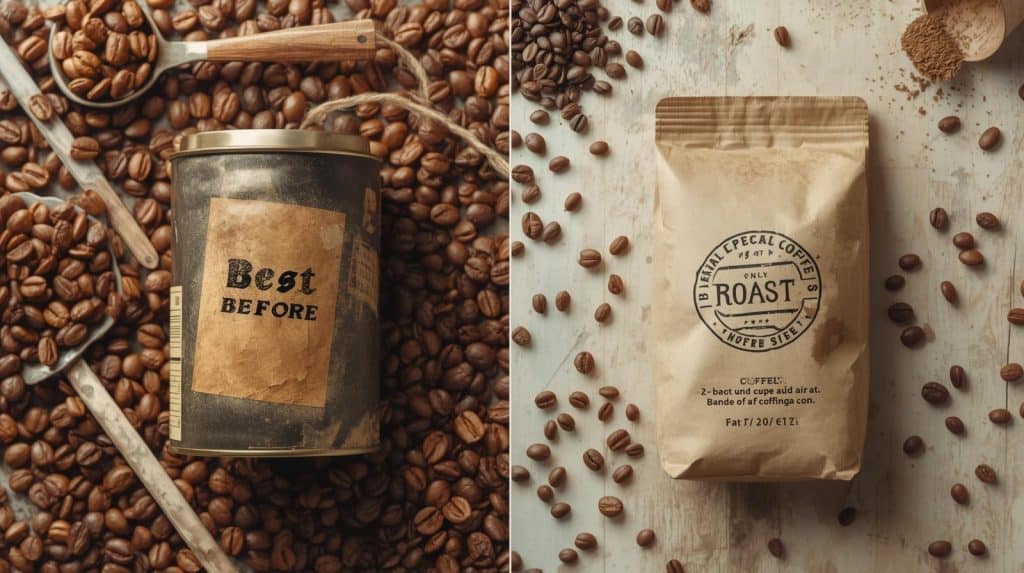
For most of coffee’s commercial history, a “best before” date printed 12 to 18 months out was the industry standard — Folgers and Maxwell House weren’t being deceptive; they were optimizing for logistics. Coffee was treated like canned goods, not fresh produce. That framing took decades to dismantle.
How Specialty Coffee Changed the Labeling Game
The specialty coffee movement — traceable to the 1970s but accelerating sharply in the 2000s — introduced a different kind of accountability. Single origin sourcing and direct-from-roaster supply chains meant roasters had something worth dating: a specific moment of transformation. It also aligned with a growing awareness that different coffee bean roast levels carry different freshness windows — a distinction a “best before” date was never designed to make.
Why Some Roasters Still Don’t Print the Date — and What That Silence Signals
A roaster that omits the roast date is almost always signaling it isn’t worth advertising — the coffee may have been roasted weeks prior, moved through a chain that adds lag, or blended from batches with no single roast moment to pinpoint. That silence is a data point.
Roasters proud of their turnaround print it because freshness is a competitive edge. Archer’s Coffee does this consistently on every bag. Those who skip it are often working through older stock, or relying on retailer relationships where nobody takes explicit ownership of freshness.
Once you understand why the roast date exists — and what it replaced — the next question is what it actually measures, and why that’s completely different from a best before date.
Roast Date vs. Best Before Date — They Are Not the Same Thing
I used to treat these as interchangeable. Then I emailed a roaster about a bag stamped “Best Before: December 2026” — and discovered it had been roasted the previous March. Nine months earlier. The coffee tasted exactly like that sounds.
What a Roast Date Actually Tells You
The roast date marks when green beans were transformed by heat — that’s when the freshness clock starts, not the packaging date. A best before date is a legal floor. A roast date gives you actual control over what you’re brewing.
Archer’s Coffee prints it on every bag. The Specialty Coffee Association recommends using within 2–6 weeks post-roast. Proper storage extends both windows considerably.
How to Calculate Your Own Freshness Window at Home
My working rule of thumb (not universal): most coffees become usable around day 5, filter peaks somewhere between 10–21 days, and many light-to-medium roasts for espresso continue improving into the third or even fourth week before gradually declining.
Ordering 100g bags from Archer’s Coffee keeps this honest — the smaller format forces faster consumption before anything slides. Running multiple bags from different roasters simultaneously? Mark the roast date on each one in marker, every time.
The freshness window is only half the picture — next, we’ll look at how that window shifts depending on roast level, and why light and dark roasts age in fundamentally different ways.
The Freshness Timeline — What’s Happening Inside the Bag
Now that you know what the label is — and isn’t — telling you, here’s what’s actually happening inside the bag. It’s not a time capsule; it’s more like a countdown. Once roasted, coffee enters a predictable chemical sequence, and where you are in that sequence changes everything.
Days 1–7: The Degassing Phase (Yes, Too Fresh Can Be a Problem)
Freshly roasted beans are actively venting CO2 — enough to throw off your extraction. Espresso over-pressurizes; a pour-over bloom turns chaotic and uneven rather than steady and controlled. Most specialty roasters ship with a 2–5 day buffer built in deliberately, so beans arrive just entering their usable window. Same-day roast-and-ship isn’t a logistics quirk — it’s precision.
Studies on coffee degassing show that a significant portion of CO₂ is released rapidly in the first hours to days after roasting, followed by a slower release over weeks. In ground coffee, as much as 40–60% of trapped CO₂ can be released almost immediately after grinding, while whole beans degas more gradually over extended storage.
Days 7–21: The Peak Flavor Window
The peak flavor window for specialty coffee runs from day 7 to day 21 post-roast. Degassing has stabilized, aromatic compounds are fully developed, and oxidation hasn’t yet begun to flatten the cup. For filter brewing — V60, Chemex, AeroPress — days 8–18 tend to produce the cleanest, most complex results.
Light and medium roasts are most expressive here; origin character is at its most legible in this range.
How quickly you move through it also depends on the roast; if you want to understand how different coffee bean roast levels behave across this window, darker profiles shift faster and with a less dramatic flavor drop.
Day 30 and Beyond: When Coffee Goes From Stale to Simply Flat
After 30 days, most light-medium roasts have undergone meaningful oxidation — brightness fades, origin character disappears, and the cup becomes one-dimensional. You’re no longer tasting the coffee; you’re tasting a coffee. Darker roasts have fewer volatile aromatics to lose, so the degradation is less dramatic but still detectable to a trained palate.
I’ve brewed bags six weeks past roast trying not to waste them. That’s exactly the cycle that proper coffee storage can slow — even if it can’t stop the clock entirely.
Once you understand where your coffee sits on this timeline, the only question left is what to actually do about it — and the decision checklist ahead makes that straightforward.
How to Buy Coffee Based on Roast Date — A 4-Question Decision Checklist
Once you’ve internalized how quickly that freshness window closes, buying a bag without a roast date feels like grabbing unlabeled produce — you just can’t know what you’re getting. After years of direct-roaster orders, this framework runs on autopilot.
Buying Online vs. In-Store — The Freshness Gap Nobody Talks About
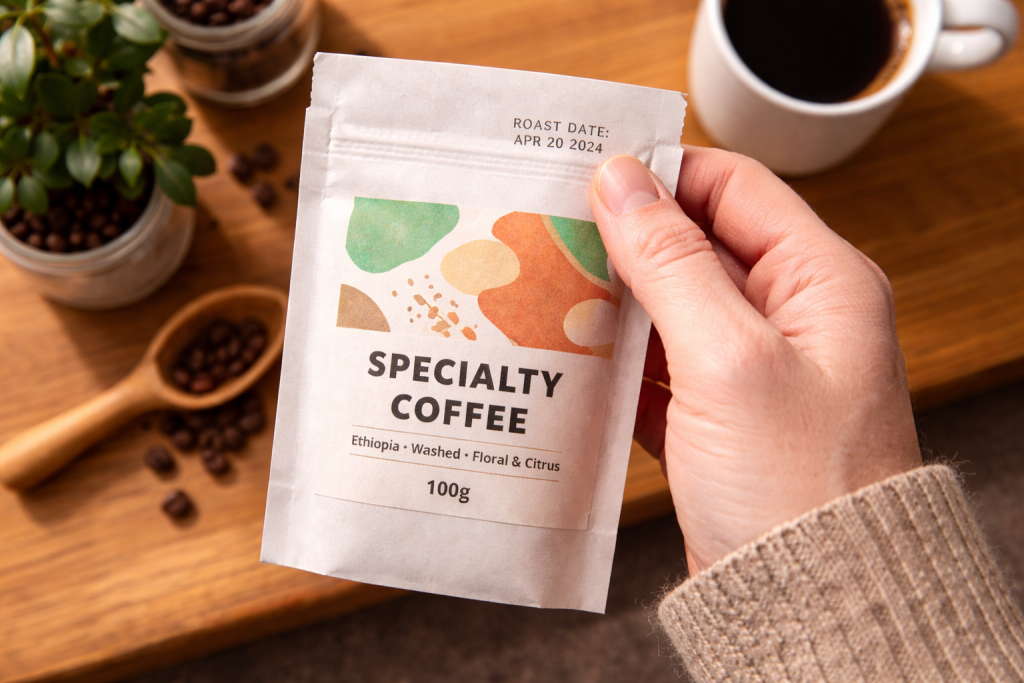
Ordering direct from a roaster like Archer’s Coffee, like in my case, means beans typically ship within one to three days of roasting — you’re receiving them at the start of their optimal window, not the end.
Retail is a different story. Even specialty bags in good cafés can be two to four weeks post-roast by the time they reach the shelf, after warehouse storage and restocking cycles.
Subscription services like Trade or Intelligentsia are calibrated to ship fresh, but still check the roast date on arrival — a delayed shipment can quietly eat a week off your window.
What to Do When the Bag Has No Roast Date
Start with the batch code or lot number — some roasters use these and will decode them if you email or DM directly. If nothing’s printed, ask before you buy. It’s often the only way to know how fresh the coffee actually is.
A roaster confident in their product answers instantly; hesitation is data. If no date exists and no answer comes, assume the beans are at least four to six weeks post-roast and brew accordingly — coarser grind, longer bloom — to coax what’s left from them.
The 4-Question Decision Checklist Before You Buy Any Bag
Use these four questions every time you consider a bag — at a café counter, on a roaster’s site, or at a specialty grocer. They take ten seconds and have saved me from a lot of flat, lifeless cups.
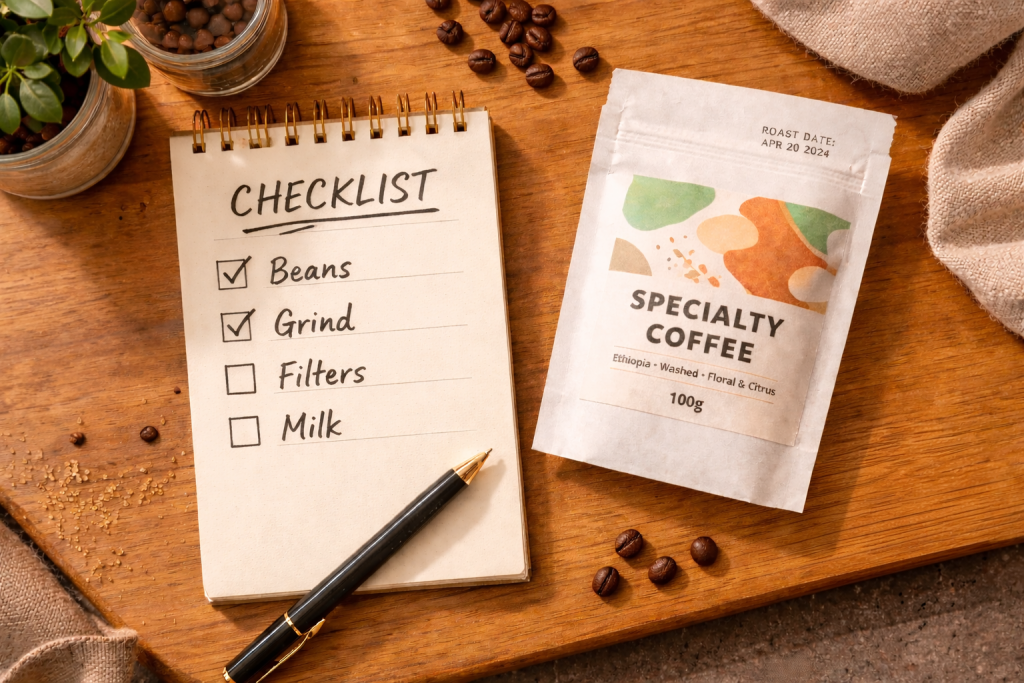
- ☐ Is the roast date visible? If not, ask. No answer means proceed with caution.
- ☐ Is the roast date within 21 days? Is the roast date within about three weeks? For filter coffee, that’s typically where peak flavor lives.
- ☐ Is the bag size right for your consumption rate? A 250g bag takes most home brewers two to three weeks (with 2-3 cups of consumption a day) — a 100g bag is the safer freshness bet if you brew occasionally.
- ☐ Is there a one-way valve? A proper degassing valve signals the roaster thought carefully about gas management — a reliable proxy for freshness-conscious practice overall.
Knowing how to buy is half the battle — next, we’ll cut through the myths that still convince people stale coffee is acceptable.
3 Myths About Coffee Freshness That Are Quietly Costing You Flavor
Once I started buying direct and actually reading the bag — applying everything I’d pieced together about roast dates and freshness windows — I realized how much I’d accepted on faith. Some of it was flat wrong.
Myth 1 — Vacuum-Sealed Always Means Fresh
Vacuum sealing slows oxidation but does not stop it. A sealed bag preserves the coffee’s state at the moment of sealing — which might be weeks or months post-roast. The seal date is not a freshness date. The roast date is.
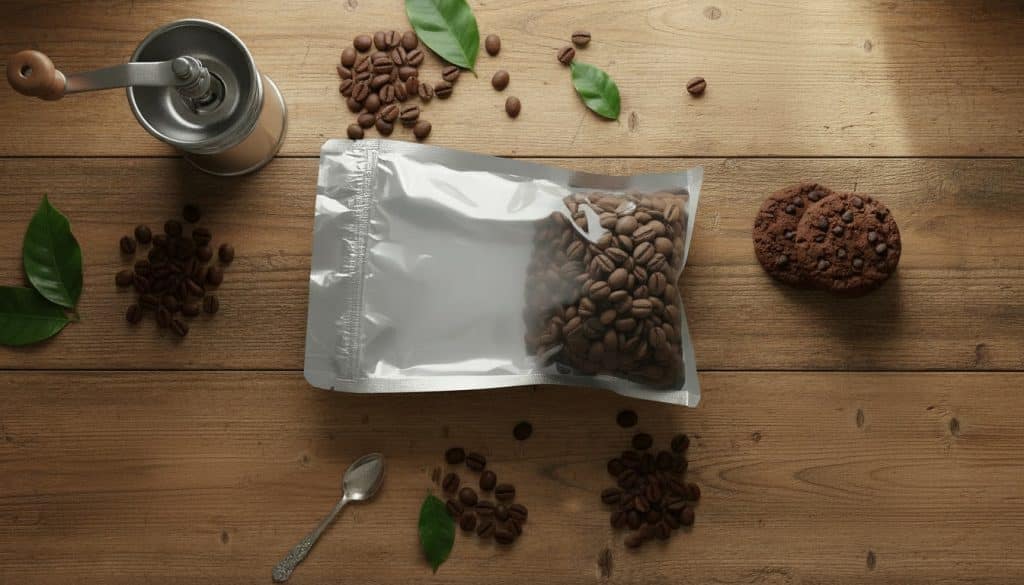
Aromatic degradation begins immediately after roasting and continues even under vacuum or inert-gas packaging—a point well established in food science literature, including research published by International journal of environmental research and public health on Thermal Contaminants in Coffee Induced by Roasting
The CO₂ you feel pressing against a freshly roasted bag is a more immediate signal of recent roasting than any vacuum seal. It doesn’t measure flavor directly, but it does indicate how much of the coffee’s volatile character is still in motion.
Myth 2 — Freezing Coffee Destroys Freshness
The freezer doesn’t ruin coffee — misusing the freezer does. Both Scott Rao and James Hoffmann have supported freezing as a legitimate long-term storage method, provided beans are kept in truly airtight containers and not repeatedly cycled in and out. The real risk isn’t the cold — it’s condensation.
Buying in 100g bags makes this practical: freeze one portion airtight, brew the other fresh. When thawed once and handled properly, frozen beans can taste very close to fresh — often indistinguishable in casual brewing.
Myth 3 — Darker Roasts Stay Fresh Longer
Dark roasts are more vulnerable to oxidation, not less. As roast degree increases, the bean’s cellular structure breaks down, creating a more porous surface that stales faster. As Scott Rao explains in The Coffee Roaster’s Companion, increasing roast degree breaks down the bean’s cellular structure and drives oils to the surface.
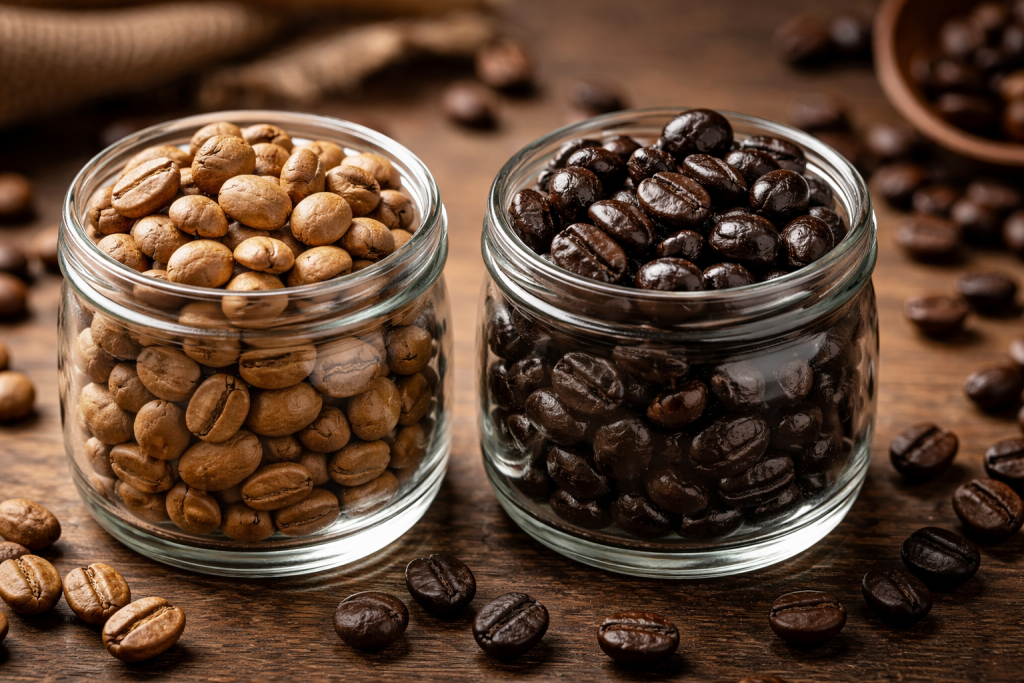
That oily surface on dark roasts isn’t depth — it’s oil that has migrated outward and is now far more exposed to oxygen. Those surface lipids oxidize quickly, accelerating flavor loss. In practice, a two-week-old dark roast will often brew flatter than a two-week-old light roast from the same roaster.
Strip those misconceptions away and the whole freshness question simplifies fast — which is exactly where I want to leave you.
Conclusion Notes
The roast date is the single most honest piece of information on a coffee bag — more useful than origin story, more revealing than price, and more reliable than any marketing language on the label.
Next time you reach for a bag, flip it over and find the date. Then check our guide on [how to store coffee beans] to make sure every gram you buy stays at its best from bag to cup.
Frequently Asked Questions
How long are coffee beans fresh after the roast date?
For filter/pour-over, the peak window ranges 7–21 days; for espresso, 7–30 days is commonly cited — beyond that, flavor is still drinkable but noticeably flatter.
What if there’s no roast date on my coffee bag?
Check for a batch code and contact the roaster directly; if no information is available, assume the coffee is past its peak and adjust grind and bloom time accordingly.
Which roast level stays fresh longer — light or dark?
Light roasts — their denser, less porous structure slows oxidation; dark roasts’ oily, open surface actually accelerates staleness despite the common assumption.
Is coffee still good 3 months after the roast date?
It’s safe to drink, but most of what makes specialty coffee worth buying — brightness, complexity, origin character — will be largely gone; it’ll taste flat and generic.
Which stays fresher longer — whole beans or ground coffee?
Whole beans by a significant margin — grinding increases surface area dramatically, accelerating oxidation; pre-ground coffee typically goes stale within 15–30 minutes without proper sealing.