Single Origin Coffee for Beginners: How It Tastes & How to Choose

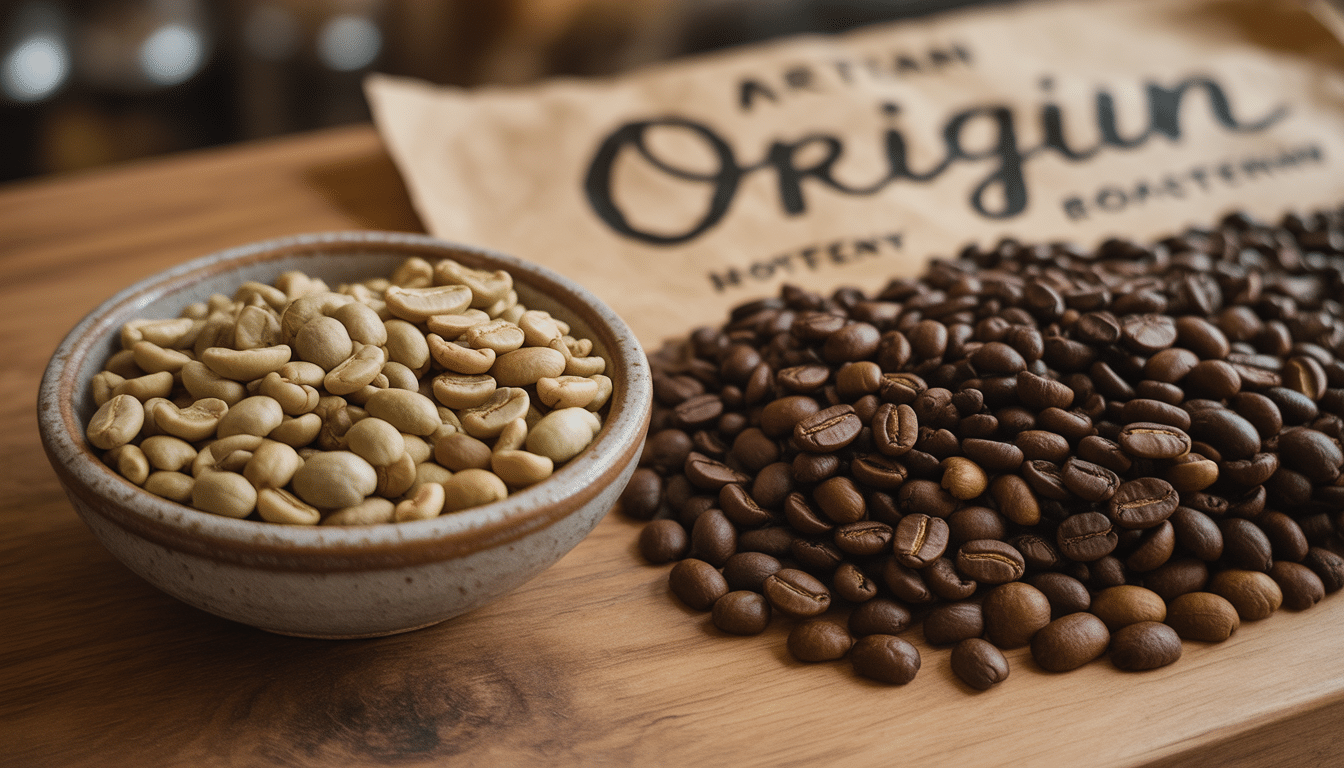
I still remember the first bag that stopped me cold — a small-batch Ethiopian from a roaster in the UAE, with “Yirgacheffe, Chelbesa Village” printed right on the label. I had no idea a coffee address could tell you so much before you even brewed a cup.
Understanding what “single origin” actually means didn’t just answer a vocabulary question — it rewired how I think about every cup.
Did you know that specialty coffee consumption continues to rise globally, with nearly half of U.S. adults drinking specialty coffee daily in 2024. Yet despite this growth, many new buyers still struggle to understand labeling terms like ‘single origin.
The Basic Definition — and Why It Matters
Single origin coffee is coffee sourced from one specific place — a single country, region, or farm — rather than mixed with beans from multiple locations. That traceability isn’t just marketing; it means every flavor in your cup can be traced back to a specific soil, variety, altitude, and set of hands.
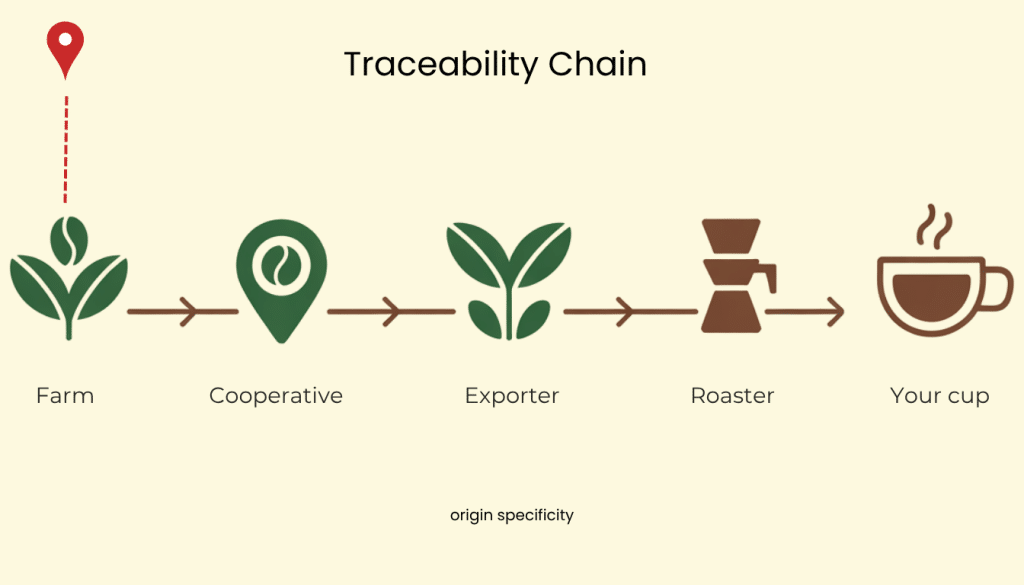
This matters because origin is flavor. When a roaster lists “Honduras, Finca Cascaritas, Lot 19 1,300 masl,” they’re telling you exactly why that cup tastes the way it does. You’re not drinking a formula — you’re drinking a place.
The Spectrum — Country, Region, and Single Farm
“Single origin” isn’t one thing — it’s a spectrum. A bag labelled “Brazil” is single origin. So is one labelled “Brazil, Santa Inês Carmo de Minas.” The difference is specificity, and specificity means more distinct, predictable flavor.
Country-level origins are broader and more consistent year to year. Regional or single-farm lots — sometimes called micro-lots — are tighter, more expressive, and often more seasonal. If you’re curious about how roast level interacts with that specificity, coffee bean roast levels explains how much heat can either highlight or mask what origin brings.
Regular Single Origin vs. Specialty Single Origin
Not all single origin coffee is specialty grade. A supermarket bag can say “Colombian” and still score below 80 on the SCA cupping scale — the threshold that separates commodity coffee from specialty. Specialty-grade single origin typically scores 80+, with the best micro-lots pushing into the 90s.
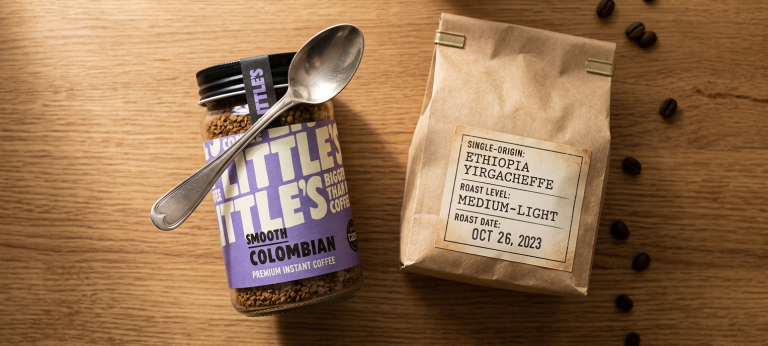
The practical difference? Bag transparency. A specialty roaster will print:
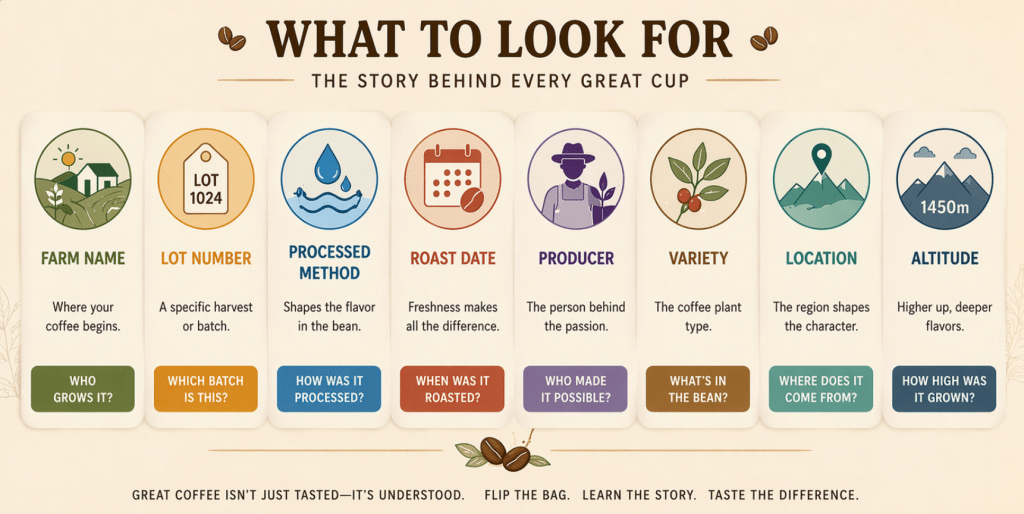
A regular single origin bag often won’t. That information gap is exactly where flavor predictability disappears.
Once you understand what single origin actually means, the next logical question is: how does it compare to the blended coffee most of us grew up drinking?
Single Origin vs. Blended Coffee — What’s Actually Different?
Understanding what single origin is feels satisfying — but the real “aha” moment came for me when I held a blend bag in one hand and a traceable single origin in the other and realized how differently each one was asking to be trusted.
How Coffee Blends Are Made
Most commercial blends combine beans from two to five different countries — sometimes more — to hit a consistent flavor target across every batch. A roastery might mix a low-acid Brazilian base with a brighter Colombian and a wilder Ethiopian natural to build something balanced and repeatable. The goal is uniformity, not discovery. Brands like Lavazza and Illy have built entire identities on nailing that same cup, year after year.
What You Lose (and Gain) With Blends
Blends flatten the peaks. That honey-sweet peach note from a Honduran microlot? It gets averaged out. What you gain, though, is forgiveness — blends are engineered to taste good across a wide range of roast levels, brewing methods, and even with milk. For someone transitioning from flavored instant coffee or standard supermarket ground, a well-made blend is a gentler on-ramp than a delicate washed Ethiopian.
Why Single Origin Tells a Story That Blends Can’t
Single origin coffee is traceable coffee — meaning every cup connects to a specific place, farmer, and harvest season.
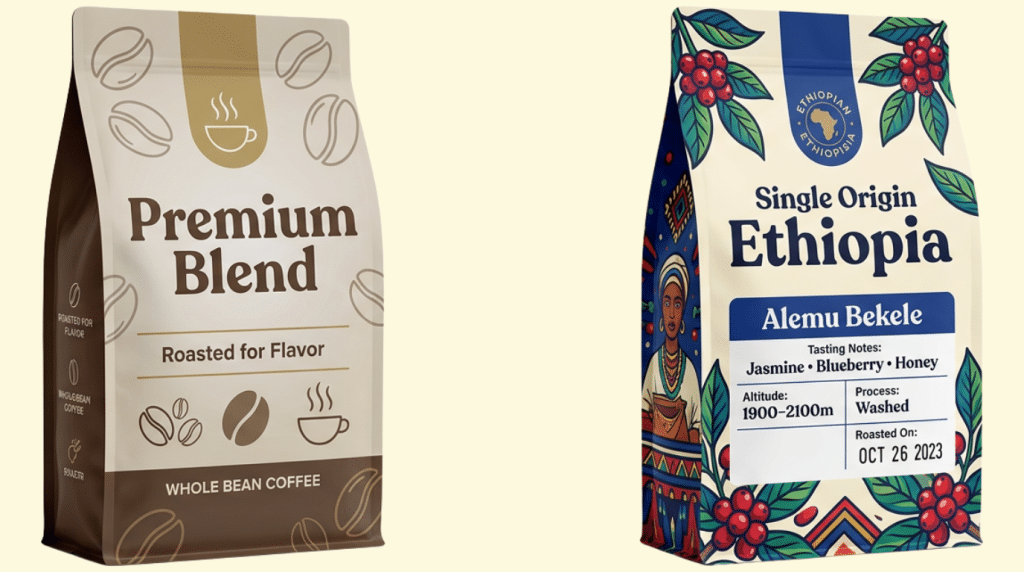
A bag labelled “Yirgacheffe, Ethiopia, washed, 2024 harvest” tells you the altitude shaped the acidity, the washing station influenced the clarity, and this exact lot won’t exist again next year. Blends can’t offer that. The terroir — soil, climate, elevation — has nowhere to speak when it’s been averaged into a house profile. That traceability is exactly what makes specialty single origin worth seeking out as a beginner.
Once you understand how processing and geography shape those individual flavors, it’s time to explore what the world’s main growing regions actually taste like in the cup.
A World of Flavors — What Each Coffee Origin Tastes Like
Once you understand the difference between single origin and blended coffee, the real fun starts: tasting where a bean comes from. I still remember tearing open a bag of washed Ethiopian Yirgacheffe and thinking someone had slipped a tea bag in by mistake.
Latin American Origins — Brazil, Honduras, El Salvador & Guatemala
Latin American single origin coffees are the friendliest starting point for most beginners. Brazil — the world’s largest producer — typically delivers milk chocolate, low acidity, and a nutty, rounded body that feels familiar if you’re coming from supermarket blends.
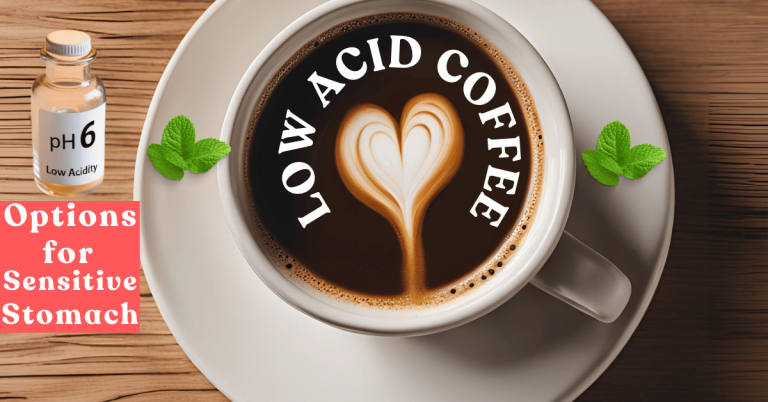
Check out our article on low-acid coffee options for sensitive stomachs.
Honduras and El Salvador often surprise people with their gentle sweetness; I’ve tasted a Honduran micro-lot from Archers Coffee that hit apple and dark plum in the same sip.
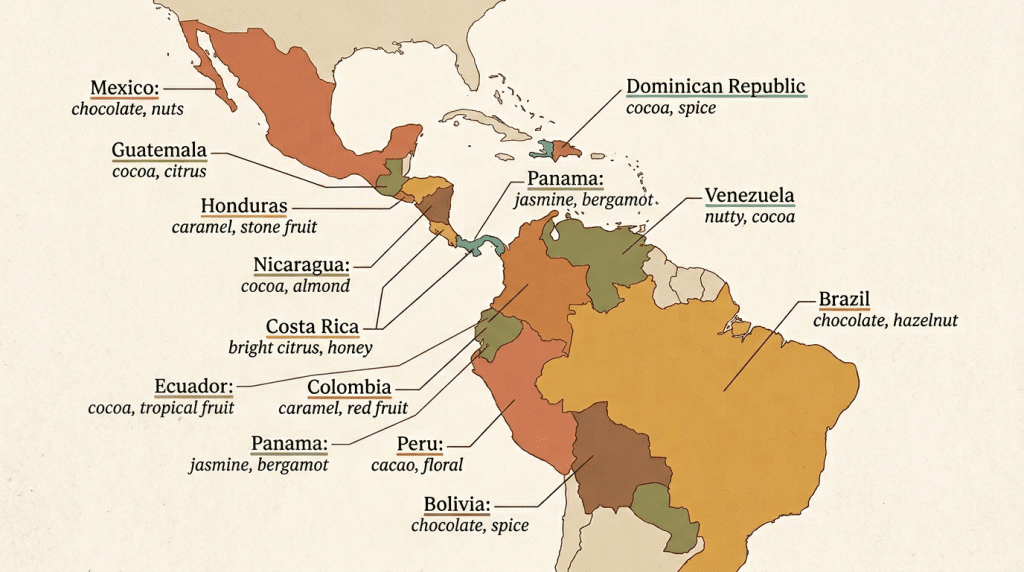
Guatemalan beans, particularly from Barberena, Santa Rosa, tend to be bolder and more complex — dark cocoa, dried cherry, a long finish. If you’re used to flavored instant coffee, a Brazilian natural process is a natural bridge into specialty without the shock.
African Origins — Ethiopia, Burundi, and Beyond
African coffees are where specialty coffee gets genuinely wild. Ethiopian beans — especially from Yirgacheffe and Guji — carry jasmine, bergamot, red plum and blueberry notes that feel less like coffee and more like a fruit tisane.
I served a natural-process Guji to my wife who doesn’t know much about coffee beans; she finished the whole cup. Burundi is quieter but beautifully structured — red currant acidity, black tea body, clean finish.
These origins reward slower brewing methods, and if you want to understand what coffee bean roast levels actually do to these delicate notes, try the same Ethiopian bean at light versus medium roast side by side.
How Processing Method Amplifies Origin Flavor
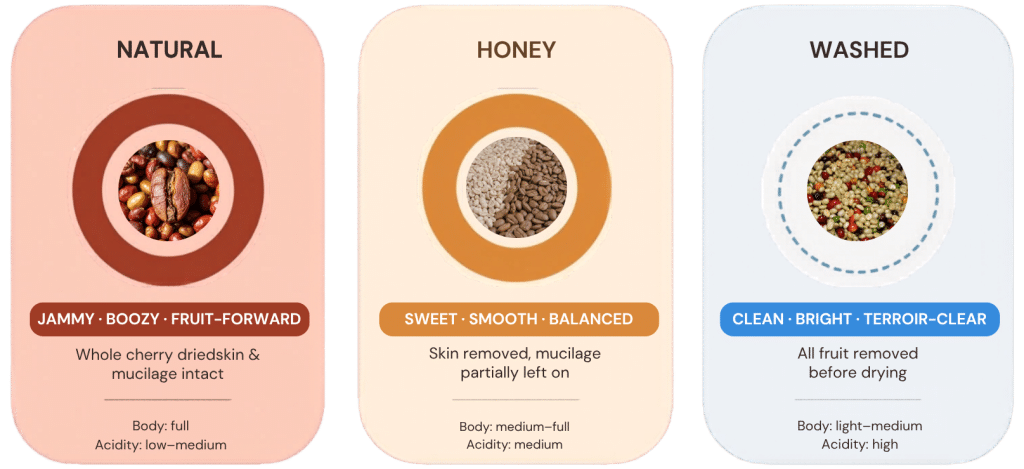
Processing method is the variable most beginners overlook, but it can transform the same bean entirely. A washed (wet) process strips the cherry away before drying, leaving a clean, bright cup where the terroir comes through clearly — think transparency.
Did you know that coffee freshness impacts flavor?
A natural (dry) process dries the whole cherry intact, letting fruit sugars ferment into the bean; the result is boozy, jammy, often polarising.
Honey process sits between them, with partial mucilage left on during drying — you get body and sweetness without the wild fermented edge. One Salvadoran farm I follow, Finca Majahual, releases the same lot in all three process variants each harvest. Tasting them back to back is the fastest education in coffee terroir you can get.
Now that you know what different origins and processing methods taste like, the logical next question is: which one should you actually start with?
How to Choose Your First Single Origin Coffee
Knowing the origins and flavor profiles is one thing — walking into a coffee shop or scrolling through a roaster’s website and actually picking something is another. Here’s how to make that first choice feel obvious rather than overwhelming.
Match Your Current Coffee Habits to an Origin
Start with what you already enjoy, not what sounds impressive. If you drink milky, medium-roast coffees without fuss, a Brazilian single origin from a farm like Fazenda Santa Ines will feel familiar — low acidity, chocolate-forward, smooth.
If you already take your coffee black and lean toward brighter flavors, jump straight to an Ethiopian or Burundian. Your current habits are the compass. Ignore anyone who tells you to start with the most complex thing on the shelf.
If you’re still transitioning away from flavored or instant options, this guide on instant coffee vs ground coffee is worth reading first — it covers what actually changes in the cup.
The 4-Question Beginner Decision Checklist
Not sure which bag to grab? Answer these four questions and you’ll land somewhere good:
- Do I drink coffee black or with milk? — Black drinkers: go African. Milk drinkers: go Latin American.
- Do I prefer chocolate/nutty or fruity/floral? — Chocolate: Brazil or Honduras. Fruity: Ethiopia or Burundi.
- How do I brew? — Filter or pour-over suits high-acidity beans; espresso suits lower-acidity origins like Guatemala or El Salvador.
- What roast level am I used to? — Check the roaster’s roast level descriptions before buying; a light-roast Ethiopian will taste nothing like the medium espresso roast you’re used to.
Four answers. One clear direction.
See how you can choose the right instant coffee for your taste.
What to Look for on the Bag — and Where to Buy
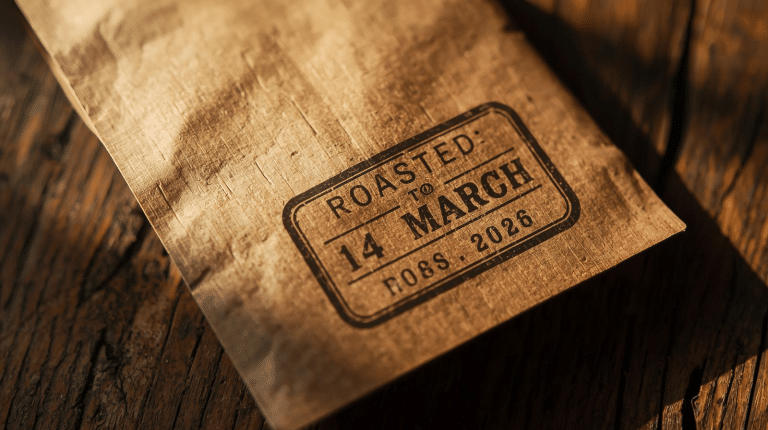
A good single origin bag tells you the country, the specific region or farm, the processing method (washed, natural, honey), and the roast date — not a best-before date, the actual roast date. Anything roasted more than six weeks ago is already past its peak for filter brewing. Look for an SCA cupping score of 80+ if it’s listed; that’s the minimum threshold for specialty grade.
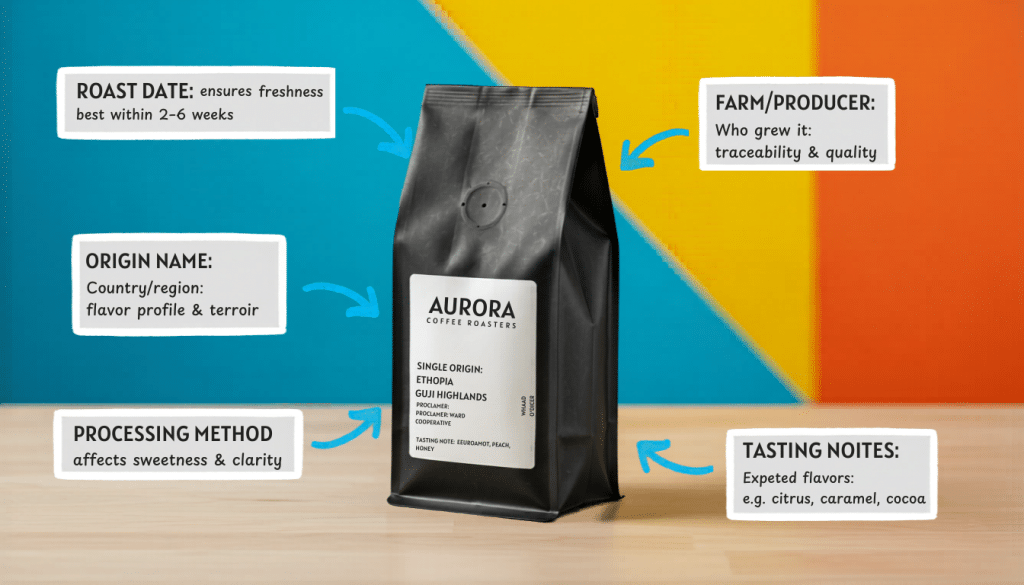
Specialty roasters generally outperform supermarket coffee by prioritizing traceability and freshness. Look for coffees that list the farm or producer and harvest year—these details signal tighter sourcing control and a more transparent supply chain. Just note that transparency is a strong indicator, not a guarantee of quality.
Once you know what to look for on the bag, the last thing holding most beginners back is myth — and a few of those deserve a direct answer.
3 Common Myths About Single Origin Coffee (Debunked)
Now that you know how to pick a bag, you’ll probably hit a wall of well-meaning bad advice. I’ve heard all three of these myths repeated confidently by people in actual coffee shops — and they’ve kept more beginners away from single origin than anything else.
“Single origin coffee is always bitter”
THE FACT
Bitterness comes from dark roasting, not origin. A light-roast Ethiopian Yirgacheffe often tastes like blueberry — no bitterness at all.
“You need expensive equipment to enjoy it”
THE FACT
A $10 V60 and a $50 burr grinder is all you need. Fresh beans, correct grind size, and hot water matter far more than gear cost.
“Single origin always means better quality”
THE FACT
“Single origin” is a traceability label, not a quality score. Look for both traceable origin and an SCA score of 80+ on the bag.
Myth #1 — “Single Origin Coffee Is Always Bitter”
I used to believe this one myself until I tried an Espresso Roast Profile natural Ethiopia from Archers Coffee and tasted what I can only describe as blueberry peach leamonade in a cup. The bitterness myth stems from a simple mix-up: people are confusing roast level with origin. A dark-roasted single origin will taste bitter — but that’s the roast talking, not the bean.
Discover why coffee tastes better on some days!
Single origin coffees roasted light to medium are often among the least bitter cups you can brew. Washed coffees from regions like Guatemala and Costa Rica are especially known for their bright, fruit-forward profiles and clean finish. If bitter is what you’ve been getting, check the roast level on the bag first — that’s your culprit, not the origin.
Myth #2 — “You Need Expensive Equipment to Enjoy It”
Single origin coffee tastes distinctly better when brewed well — but “brewed well” does not mean a $400 setup. A Hario V60 costs around $10, and a basic burr grinder like the Timemore C2 runs about $50. That’s the full kit.
I’ve brewed a beautiful Guatemalan Geisha Natural Lot 2722 on a coffee machine. Even on an entry-level machine like the De’Longhi Magnifica S, the cup still shows its signature floral, tea-like clarity with minimal bitterness.
The real requirement isn’t expensive gear — it’s fresh beans (roasted within the last 3–4 weeks), a consistent grind, and water just off the boil. If you’re currently making instant coffee or ground coffee, even a cheap manual brewer is a genuine step up.
Myth #3 — “Single Origin Always Means Better Quality”
This one goes the other direction, and it trips up enthusiasts as much as beginners. “Single origin” is a traceability label, not a quality certification. A coffee can be 100% traceable to one farm and still score below specialty grade if it was harvested carelessly, poorly processed, or stored badly before roasting.
What you’re actually looking for is the combination: single origin and specialty grade. On a well-labeled bag, that means an SCA cupping score of 80+, a named farm or cooperative, a specific harvest date, and a roast date within the past month.
Origin tells you where; quality tells you how well. You need both. A bag that only says “Colombia” with no other details is closer to a marketing word than a quality signal — which is exactly why reading the label, as covered in the previous section, matters so much.
With the myths out of the way, you’re genuinely ready to buy your first bag — and more importantly, to trust what you taste in the cup.
My takeaway
Single origin coffee is not a gimmick or a luxury reserved for the coffee elite — it is an open invitation to taste the world one cup at a time, starting exactly where your current palate feels most comfortable.
See how you can champion the art of making an iced instant coffee like a barista.
I encourage you to visit a local specialty roaster and taste two contrasting origins side by side — such as a Brazilian and an Ethiopian — or order a small sampler pack online to experience the difference at home before committing to a full bag.
Frequently Asked Questions
What is single origin coffee and why does it matter?
It is coffee sourced from one traceable location — it matters because it preserves unique regional flavours and allows consumers to support specific producers ethically.
Which single origin coffee is best for beginners?
Brazil is the most beginner-friendly — low acidity, smooth body, and notes of almond and milk chocolate make it approachable and easy to enjoy without adjustment.
Which is better — single origin or blended coffee?
Neither is objectively better — blends offer consistency and value; single origin offers traceability, unique flavour, and a more personal coffee experience.
Is single origin coffee stronger than regular coffee?
Strength is a function of roast level and brew ratio, not origin — single origin can be mild or bold depending entirely on how it is roasted and prepared.
Which single origin has the most unique flavour — Ethiopia or Colombia?
Ethiopia is often considered one of the most distinctive coffee origins, known for its floral, fruit-forward profile that stands apart from many Latin American coffees like Colombia.